For the past 3 years, I've made it a point to knit at least a few bears for the Mother Bear Project, which is a wonderful non-profit dedicated to providing comfort and hope to children, primarily those affected by HIV/AIDS in emerging nations, by giving them a gift of love in the form of hand-knit and crocheted bears.
They have patterns available for purchase as well as everything-you-need kits which include yarn, the pattern, and knitting needles or a crochet hook.
For this year's batch o' bears, I decided to use one of my favorite yarn brands which I turn to time and time again - Brown Sheep. This is a brand of yarn I've been using since the early years of my knitting life. Back then, I was attracted by the affordability that didn't sacrifice quality. And there were so many colors to choose from in each yarn base! Over the years, I learned more about their story: they're a family owned company located in Western Nebraska, and have been working to improve their sustainability on a continuing basis. Plus, their yarns are made with US-sourced fibers whenever possible, and they use only natural fibers - no acrylic here!

They were kind enough to send 4 skeins of Nature Spun worsted my way for the purposes of this review - I chose Victorian Pink, Bit of Blue, Impasse Yellow and Latte. Since I had such a nice mix of colors, I decided to put this yarn through its paces by adding color work to each bear's sweater. I've had Alice Starmore's Charts for Color Knitting on my bookshelf for quite some time and decided to page through to find some simple motifs to use. It took a little bit of "thinking" to plug them into the existing pattern, but it was worth it - aren't they cute?
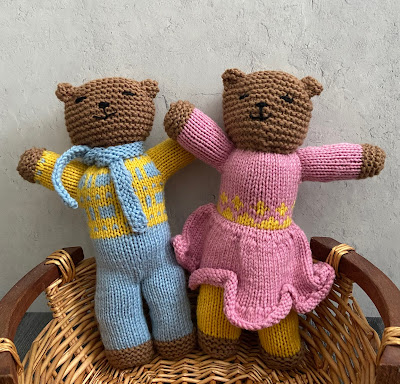
The yarn handled both stranded color work and picking up stitches (for each arm) beautifully. And once I gave the bears a bath in some Eucalan, the yarn softened up and became super cuddly!

I have plenty of yarn left to knit more bears - each ball has 245 yards, which goes a long way as you can imagine! Each skein is spun from 100% US grown wool and is permanently mothproofed, for anyone who is worried about moths and other pests. I've knit with so many of their yarns over the years - in fact, some of those projects are still in extremely good shape, despite their age. I have just as many projects knit with other brands of yarns which have already gotten holes or pilled horribly in much less time. Clearly, Brown Sheep knows a thing or two about making yarn that is delightful to work with and will last for the long haul.
If you want to give Nature Spun a try for your next project, they were kind enough to set up a coupon code for FREE shipping to the continental US on ANY online order! Just enter HBS2020 at checkout now through the end of August 2020.
Like this post? Pin it!

They have patterns available for purchase as well as everything-you-need kits which include yarn, the pattern, and knitting needles or a crochet hook.
For this year's batch o' bears, I decided to use one of my favorite yarn brands which I turn to time and time again - Brown Sheep. This is a brand of yarn I've been using since the early years of my knitting life. Back then, I was attracted by the affordability that didn't sacrifice quality. And there were so many colors to choose from in each yarn base! Over the years, I learned more about their story: they're a family owned company located in Western Nebraska, and have been working to improve their sustainability on a continuing basis. Plus, their yarns are made with US-sourced fibers whenever possible, and they use only natural fibers - no acrylic here!

They were kind enough to send 4 skeins of Nature Spun worsted my way for the purposes of this review - I chose Victorian Pink, Bit of Blue, Impasse Yellow and Latte. Since I had such a nice mix of colors, I decided to put this yarn through its paces by adding color work to each bear's sweater. I've had Alice Starmore's Charts for Color Knitting on my bookshelf for quite some time and decided to page through to find some simple motifs to use. It took a little bit of "thinking" to plug them into the existing pattern, but it was worth it - aren't they cute?
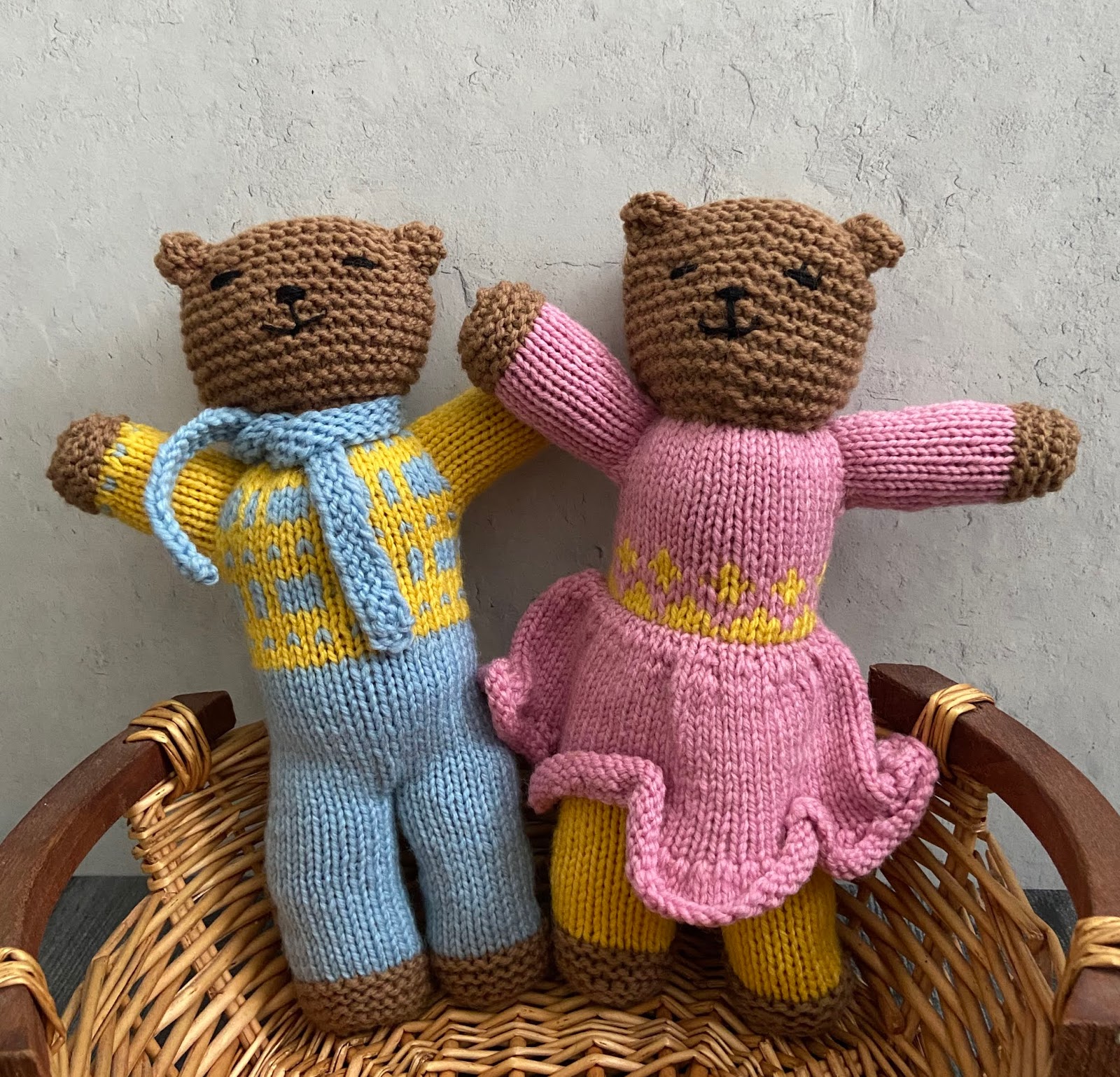
The yarn handled both stranded color work and picking up stitches (for each arm) beautifully. And once I gave the bears a bath in some Eucalan, the yarn softened up and became super cuddly!

I have plenty of yarn left to knit more bears - each ball has 245 yards, which goes a long way as you can imagine! Each skein is spun from 100% US grown wool and is permanently mothproofed, for anyone who is worried about moths and other pests. I've knit with so many of their yarns over the years - in fact, some of those projects are still in extremely good shape, despite their age. I have just as many projects knit with other brands of yarns which have already gotten holes or pilled horribly in much less time. Clearly, Brown Sheep knows a thing or two about making yarn that is delightful to work with and will last for the long haul.
If you want to give Nature Spun a try for your next project, they were kind enough to set up a coupon code for FREE shipping to the continental US on ANY online order! Just enter HBS2020 at checkout now through the end of August 2020.
Like this post? Pin it!

Comments
Post a Comment